Whether it’s a book, brochure, or catalog, every printed product requires paper, energy, and other resources. At the same time, there is a growing awareness of the need to use these resources responsibly. That is why the topic of “sustainable printing” is becoming increasingly important for companies, publishers, and public sector clients.
However, sustainability in the printing industry doesn’t begin with the finished product. It encompasses the entire manufacturing process—from the selection of materials and efficient production processes to recycling and the responsible use of energy and raw materials. In addition, there are measures that go beyond the actual production process and contribute to environmental and climate protection.
Beltz Grafische Betriebe also follows this holistic approach. Sustainability is not a single project, but rather an ongoing process that shapes many areas of the company. Modern production technology, responsible use of materials, and the continuous optimization of processes form the foundation for this.
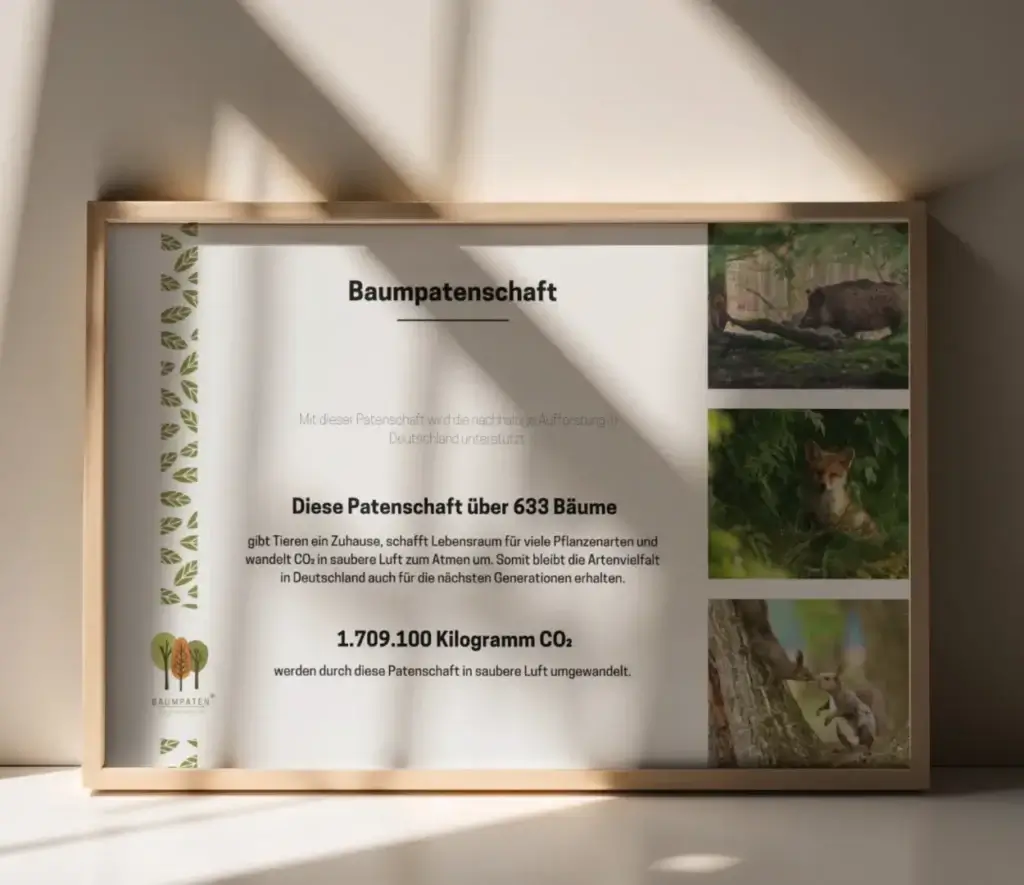
With the support of Baumpaten Deutschland, Beltz Grafischen Betriebe is adding another component to this commitment. The project promotes the reforestation of native forests and complements existing sustainability measures by making a long-term contribution to the preservation of natural habitats.
But what exactly does “sustainable printing” mean? What factors make a printing project more environmentally friendly, and why do far more factors come into play than just paper and ink?
Contents of this article
What does sustainable printing mean?
Sustainable printing means using resources as efficiently as possible and reducing environmental impact throughout the entire production process. It is not about a single measure, but rather the interplay of many factors.
When people think of sustainable printing, they often associate it with recycled paper or eco-friendly inks. While these aspects are important, they are only part of the bigger picture. Equally crucial are modern production processes, efficient use of materials, short transportation routes, and the recycling of recyclable materials.
The lifespan of a printed product also plays a role. High-quality books are often used for many years and passed on multiple times. This results in a different use of resources compared to short-lived printed materials, which are discarded after only a short time.
Sustainability also means regularly reviewing and refining existing processes. New technologies, more efficient machinery, and optimized production processes help to continuously improve the use of materials and energy.
In summary, sustainable printing encompasses many interrelated areas:
| Bereich | Maßnahme | Nutzen |
|---|---|---|
| Druckvorstufe | Einsatz prozessloser Druckplatten ohne chemisches Entwicklungsbad. | Jährlich werden rund 550.000 Liter Wasser und 6.700 Liter Chemie eingespart. |
| Materialkreislauf | Recycling der verwendeten Aluminiumdruckplatten. | Wertvolle Rohstoffe bleiben im Materialkreislauf erhalten. |
| Beschaffung | Prozesslose Druckplatten aus deutscher Herstellung. | Kürzere Lieferwege und eine regionalere Lieferkette. |
| Energie | Produktion mit 100 % Ökostrom. | Einsatz erneuerbarer Energien im Produktionsbetrieb. |
| Papier | FSC®-zertifizierter Betrieb und Einsatz zertifizierter Materialien. | Nachvollziehbare Herkunft der eingesetzten Rohstoffe. |
| Engagement | Unterstützung von Baumpaten Deutschland. | Ergänzung der eigenen Nachhaltigkeitsmaßnahmen durch die Wiederaufforstung heimischer Wälder. |
It is only the interplay of these factors that results in a printing process that combines environmental responsibility with high quality. Sustainability is therefore not a single decision, but rather accompanies every step along the way to the finished book.
What factors make a print production sustainable?
Sustainability doesn’t happen by chance. Behind every resource-efficient production process lie numerous decisions that affect material consumption, energy use, and the environment. Many of these measures remain invisible to customers, yet they have a major impact on a printed product’s environmental footprint.
Responsible Use of Paper
Paper is the most important raw material for a printing company. That is why sustainable printing begins with the selection and efficient use of this material. Careful production planning helps ensure optimal use of paper and minimizes waste as much as possible.
At the same time, the origin of the paper plays an important role. Certified raw materials from responsibly managed forests make a significant contribution to the protection of natural resources and promote sustainable forestry.
Efficient Production Processes
Today’s modern printing presses operate with significantly greater precision and are much more resource-efficient than they were just a few years ago. Automated adjustments shorten makeready times and reduce the amount of waste paper generated when setting up a print job.
In the finishing process as well, automated workflows ensure that materials are used as efficiently as possible and that work processes are continuously optimized. This not only conserves resources but also helps maintain a consistently high level of product quality.
Sustainability at Beltz Grafische Betriebe
For us, sustainable production means focusing on specific stages of the manufacturing process. One example is the prepress stage in offset printing. Here, Beltz Grafischen Betriebe uses process-free printing plates. Unlike conventional plates, these do not need to be chemically washed out in a developing machine. This eliminates the need for the developing bath, some of the required chemicals, and the subsequent disposal of residual chemicals.
According to its own calculations, Beltz saves approximately 550,000 liters of water and 6,700 liters of chemicals annually thanks to this technology. It also eliminates the need for coating agents and additional packaging for the chemicals used. After use, the aluminum plates are returned to the recycling cycle.
Since 2025, Beltz has been sourcing its process-free printing plates from a German manufacturer. In addition to shorter delivery routes, the plates proved their worth during the in-house testing phase by requiring less dampening solution, drying quickly, and maintaining a stable ink balance. The existing production workflow could be largely maintained.
Beltz is also committed to reducing energy and material consumption. Production is powered by nearly 100 percent green electricity. Thanks to FSC® certification, printed products can be manufactured using paper from certified supply chains upon request. For unavoidable emissions, the company also makes a financial climate contribution. This does not replace emission reductions within production, but complements the measures already being implemented directly at the facility.
This allows us to understand Beltz’s approach to sustainability through specific examples:
- Process-free printing plates without a chemical developer bath
- Savings in Water and Process Chemicals
- Recycling the Used Aluminum Sheets
- Shorter delivery routes thanks to printing plates from Germany
- Production using nearly 100 percent green electricity
- FSC®-certified supply chains for eligible paper products
The tree sponsorship program complements these measures outside the scope of actual book production. It is therefore not intended as a substitute for cost-cutting measures in operations, but rather as an additional contribution to the protection and development of native forest areas.
Why Sustainable Printing Goes Beyond Production
Even though modern production processes can significantly reduce resource consumption, not every environmental impact can be completely avoided. That is why sustainable practices do not end with the finished book.
More and more companies are supplementing their own initiatives with projects that make a positive contribution to the environment and nature. These include, for example, the protection of natural habitats, the promotion of biodiversity, and the reforestation of forests.
Forests, in particular, play an important role in regulating the climate. They store carbon dioxide, produce oxygen, protect the soil from erosion, and provide a habitat for numerous animal and plant species. At the same time, many forests in Germany are facing major challenges. Drought, storms, and pest infestations have damaged numerous forest areas in recent years.
For this reason, reforestation is becoming increasingly important. It is not just a matter of planting new trees. The key is to create resilient mixed forests that can better adapt to changing climate conditions and form stable ecosystems over the long term.
Our New Sustainability Project with Baumpaten Deutschland
To further expand its existing commitment to sustainability, Beltz Grafische Betriebe will support the Baumpaten Deutschland project going forward .
The initiative is dedicated to the reforestation of damaged forest areas in Germany. In collaboration with regional forestry operations, tree species suited to the local conditions are planted to promote the development of species-rich mixed forests. The goal is to create stable forests that will be preserved for future generations.
The focus here is not on planting as many trees as possible, but rather on the sustainable development of forest areas. A variety of tree species makes forests more resilient to drought, disease, and extreme weather events. At the same time, this creates valuable habitats for numerous animals, plants, and insects.
With the support of Baumpaten Deutschland, Beltz Grafische Betriebe is adding another long-term component to its existing sustainability measures. The project embodies a responsible approach to natural resources and is therefore in line with our vision of sustainable book production.
Sustainability is achieved through many small steps
People who want to print sustainably often think first of individual measures. In reality, however, sustainability results from the interplay of many decisions.
These include, among other things:
- the conscious use of paper and other raw materials
- modern and efficient production facilities
- the continuous optimization of workflows
- the recycling of recyclable materials
- Investments in Sustainable Technologies
- Long-term commitment to environmental protection and nature conservation
Each individual measure helps conserve resources and reduce environmental impact. It is only through the synergy of these components that we can achieve a printing process that combines environmental responsibility with high product quality.
Sustainable printing means shaping the future
Sustainability is not a state that is ever fully achieved. It is constantly evolving and thrives on the willingness to continually question existing processes and explore new approaches.
Beltz Grafische Betriebe is also committed to this goal. In addition to resource-efficient production, this commitment now extends beyond the company’s own printing facility. Through its support of Baumpaten Deutschland, the company’s existing sustainability strategy is being expanded to include another initiative that goes beyond the actual production of books.
In this way, sustainable printing combines high-quality printed materials with a responsible approach to the environment and natural resources.
Sustainable Printing with Beltz Grafische Betriebe
Would you like to have books or other printed materials produced in a sustainable manner? We’d be happy to advise you on the various options for resource-efficient production and tell you about our sustainability measures.
Together, we’ll find the right solution for your printing project and combine high-quality production with responsible use of resources.