Bookbinding linen is one of the tried-and-true materials used in high-quality book production. It is used wherever bindings need to be durable while also conveying a distinctive aesthetic. The material protects the book block, withstands mechanical stress, and lends the finished book a tangible sense of quality. Bookbinding linen is therefore an obvious choice, especially for publications that are intended for long-term use, for collections, or for representative purposes.
Bookbinding linen also offers many design possibilities. Color, surface texture, and embossing significantly shape a book’s character and influence both the first impression and the experience of using it. Depending on the design concept, the cover can appear understated and classic or be deliberately striking. This makes bookbinding linen not only a functional material but also an important tool for creative expression.
For publishers, institutions, and companies, the choice of cover material is closely tied to the expectations for the finished product. A book should be compelling in terms of content, but it should also stand the test of time in terms of craftsmanship and appearance. Bookbinding linen provides a solid foundation for this.
Whether used as a full cover or as part of a half-linen band, this material is employed in a variety of forms. This article explains the characteristics that distinguish bookbinding linen, how it is processed, and the types of book projects in which its strengths are most evident.
Bookbinding linen as a material for high-quality book covers
What Sets Bookbinding Linen Apart
Bookbinding linen is a textile covering material used for sturdy book covers. In book production, it is used when a cover needs to be durable while also having a distinctly high-quality surface. Specialty retailers of bookbinding supplies carry bookbinding linen in a wide range of qualities, colors, and textures. A distinction is made, among other things, between open-weave and coated fabrics. Coated varieties are considered particularly resistant to soiling, while uncoated surfaces make the textile structure more visible.
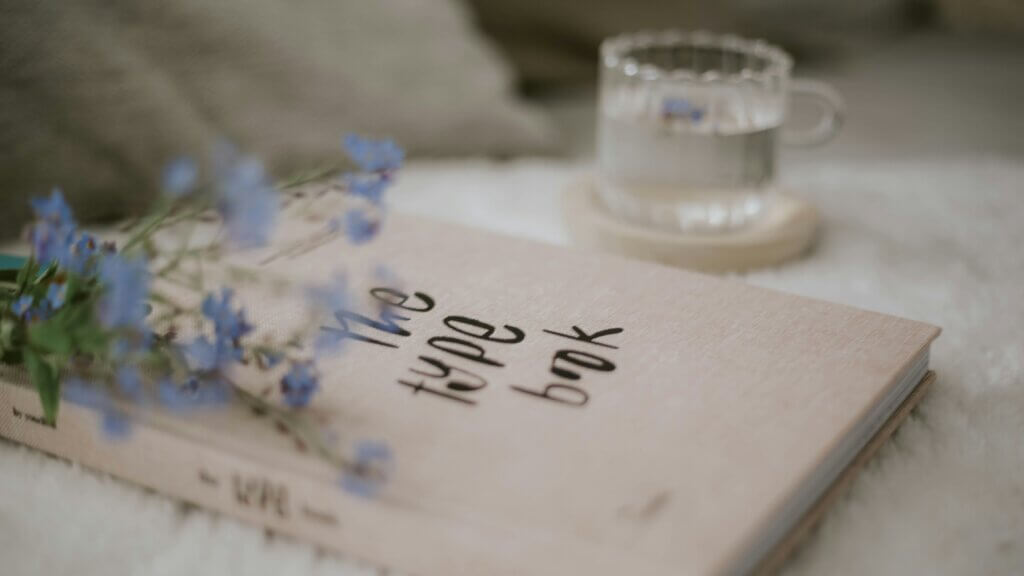
What stands out most is the feel. A cover bound in bookbinding linen feels different from a laminated paper cover. The surface feels textured, warm, and substantial. At the same time, the material has a visible texture that gives the book character. In addition, bookbinding linen is well-suited for embossing. This is another reason why it has long been valued in high-quality book printing. In particular, the exceptional feel, the high-quality appearance, the long durability, protection against soiling, and the possibility of embossing are typical reasons why many customers choose this cover material.
Why Bookbinding Linen Is Valued in Book Printing
The strength of bookbinding linen lies in its combination of durability and aesthetic appeal. Bookbinding fabric is used for books intended for long-term use that need to remain in good condition even after frequent handling. Particularly for covers subjected to heavy wear and tear, the focus is on exceptionally durable materials. This is evident, for example, in cotton library cloth, which was developed for long-lasting library bindings and meets specific quality standards.
At the same time, bookbinding linen offers creative possibilities that go beyond its purely protective function. The material is available in a wide range of colors, finishes, and textures. Depending on the type, blind embossing, hot foil stamping, screen printing, or other printing methods are also possible. This allows the cover to be precisely tailored to a book’s content, target audience, and overall appearance. It is precisely this combination of technical suitability, durability, and design quality that makes bookbinding linen a material that continues to hold a firm place in high-quality book printing.
How Bookbinding Linen Is Used in Book Production
Bookbinding linen is always used when a book cover is intended not only to protect the book but also to serve an aesthetic purpose. The material is not considered in isolation but as part of an overall design concept. What matters most is how it interacts with other components, such as paper, printing, and binding.
Generally speaking, there are two typical types of applications.
A Comparison of Linen Ribbon and Half-Linen Ribbon
With linen binding, the entire cover is covered with bookbinding linen. This style has a cohesive and understated appearance. It is often chosen for durable editions where a clean and minimalist design is the focus.
The half-linen binding combines bookbinding linen with a paper cover. Typically, the spine is covered in linen, while the covers are made of printed paper. This combination offers greater creative freedom and is frequently used for literary publications.
Overview of typical features:
- linen ribbon
- Full covering with bookbinding linen
- minimalist, clean design
- particularly durable in everyday use
- Half cloth binding
- Bookbinding linen on the spine, paper on the covers
- Combination of texture and print pattern
- greater creative freedom
An example of the use of half-linen bands can be found in our collaboration with Berenberg Verlag. For more information on the project, see the section “Bookbinding Linen in Practice.”
The Design Possibilities Offered by Bookbinding Linen
In addition to the choice of binding type, bookbinding linen offers a wide range of design options. The color and texture of the material form the foundation, and further finishes are added on top of that.
Typical design elements include:
- Embossing: The title and graphic elements are embossed directly into the material and remain permanently visible and tactile
- Color options: Bookbinding linen is available in a wide range of colors, from muted tones to bold hues
- Combination with paper: particularly with half-linen binding, this creates a interplay between the textile spine and the printed surface
- Print Finishing: Additional techniques can further enhance the effect. You can find an overview of these in our blog post on print finishing techniques.
These options allow the book cover to be tailored specifically to the content, target audience, and intended use. Bookbinding linen thus not only provides protection but also becomes an important part of the book’s overall design.
Bookbinding Linen in Practice
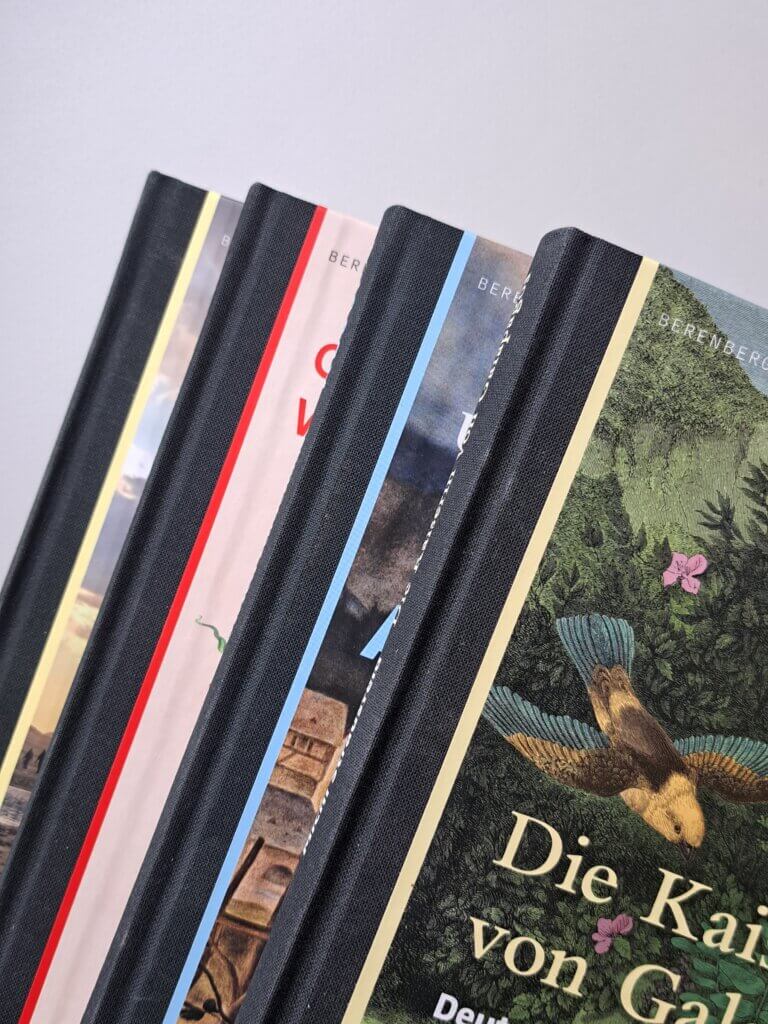
A look at actual book productions illustrates the concrete impact of material selection and design. In collaboration with Berenberg Verlag, numerous titles have been produced in recent years in which the cover, content, and craftsmanship have been closely coordinated. The publisher is known for a clearly curated catalog and places great emphasis on a harmonious exterior design. The books’ design elements are selected with corresponding care.
A commonly used format is the half-linen binding. The fabric spine provides stability and a pleasant feel, while the printed covers offer scope for design. This combination allows for the precise implementation of visual elements while ensuring a durable binding. Particularly for literary titles or works of essays, this creates a look that is understated yet retains its own distinct character.
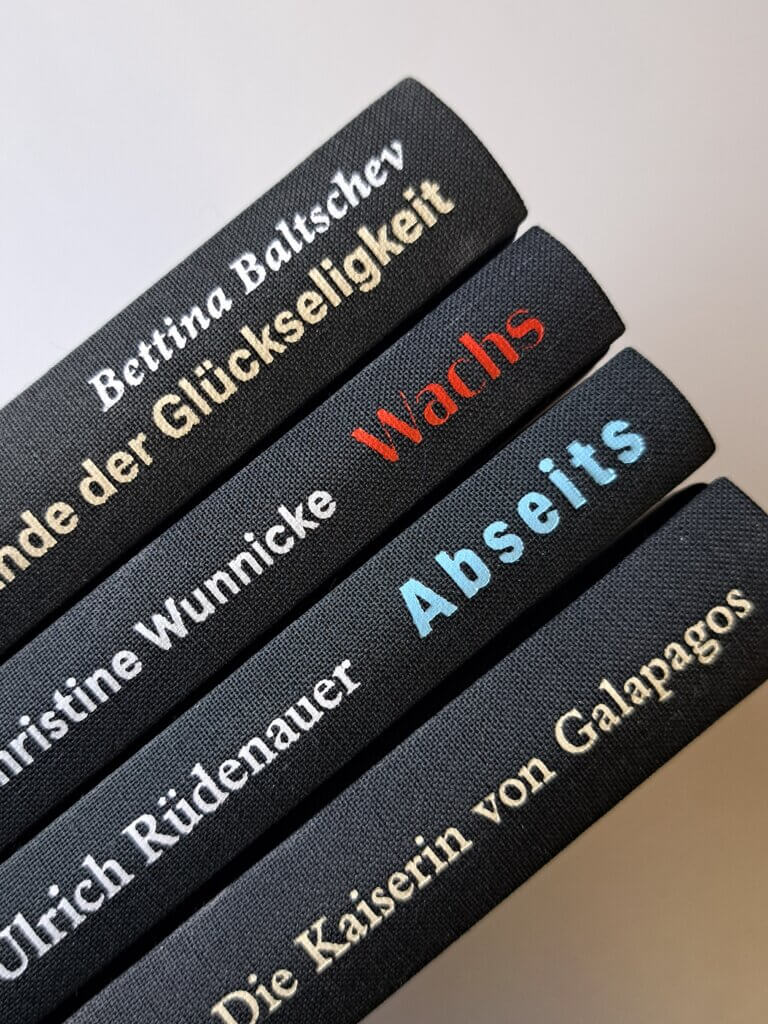
- Selecting a suitable cover material in the appropriate color and texture
- the alignment between the linen backing and the printed cover paper
- the choice of binding, such as thread stitching for high durability
- the implementation of embossing for titles or graphic elements
- Precise workmanship at every stage of production
It is only through the interplay of these aspects that a book is created that is both functional and visually appealing. The technical equipment plays an important role in this process. Modern machinery and well-established processes ensure that materials are processed with precision and design concepts are reliably brought to life. If you’re interested in learning how such projects are carried out in detail, you can find out more about the technical capabilities of our facility.
Further examples of the publisher’s work can also be found on the Berenberg Verlag website. There, it becomes clear how design and content are consistently considered together and what role the book’s physical presentation plays in its overall impact.
Plan Your Equipment Now with a Focus on Specific Needs
The choice of binding material affects not only a book’s durability but also its impact in everyday use. Whether it’s a linen or half-linen binding, whether the design is understated or striking—what matters most is that the material, craftsmanship, and design are harmoniously coordinated.
Beltz Grafischen Betriebe in Bad Langensalza will help you find the right solution for your book project. Together, we can clarify your requirements, compare samples, and work out the details of how to bring your project to life.
Would you like to learn more about suitable materials and design options? Contact us now for personalized advice.