Whether at the beach, on the train, or relaxing on the sofa—paperbacks have become an integral part of readers’ daily lives. They’re considered convenient, affordable, and yet high-quality. But what exactly is behind this book format? And how does it differ from other book formats, such as paperbacks or hardcovers? In this article, we explain what defines a paperback, who it’s particularly suited for—and what production options Beltz Grafischen Betriebe offers.
The contents at a glance
What is a paperback?
Definition and Characteristics
A paperback is a book with a flexible cover—usually made of sturdy cardboard or thick paper. The book block is often bound using adhesive binding, though thread stitching is also used, albeit less commonly. It thus falls between a paperback and a hardcover: it is sturdier and larger than a classic paperback, but less expensive and lighter than a hardcover.
In German-speaking countries, “paperback” is often used as a synonym for “Taschenbuch,” although the two terms differ both technically and visually. Paperbacks often have a larger format, higher-quality binding, and more attractive cover design than standard Taschenbücher.
Differences Between Paperbacks and Hardcovers
While paperbacks usually feature a thin cover and a smaller format, the paperback looks significantly more elegant thanks to its design. A hardcover, on the other hand, has a rigid cover and is more labor-intensive to produce—but it is particularly durable and prestigious. The paperback combines many of the advantages of both formats, making it an attractive middle ground.
Advantages and Unique Features of the Paperback
There’s a good reason why the paperback has become so popular in the book market. It combines convenience, quality, and affordability in a single format. For many publishers, authors, and readers, it’s the ideal compromise between a paperback and a hardcover.
These five advantages are what make paperbacks so popular:
1️⃣ Compact and lightweight:
Thanks to its flexible cover, this book format is ideal for traveling—the books fit in your bag and weigh significantly less than hardcover books.
2️⃣ Higher quality than a paperback:
Thicker paper, a more appealing design, and sturdier construction make it a more visually and tactilely appealing alternative.
3️⃣ Cost-effective to produce:
Production is simpler and less expensive than for hardcover books—and that’s reflected in the retail price.
4️⃣ A wide range of design options:
Whether it’s a fold-out brochure, UV varnish, or embossing—paperbacks can also be creatively finished.
5️⃣ Special sustainability features:
Thanks to its reduced use of materials and the option to print on recycled paper, this format is also environmentally friendly.
This combination makes the paperback a popular choice for novels, self-help books, reference books, and travel literature. It’s a book format that combines reading comfort with affordability—without compromising on quality.
Who is this book format particularly suitable for?
Paperbacks are versatile—both for personal and professional use. They strike a chord with modern readers who value quality and flexibility without spending a fortune. For publishers and self-publishers alike, this format is often the first choice.
The following target groups benefit the most:
- Frequent readers and commuters:
Lightweight, compact, and durable—ideal for on the go. - Students and academic readers:
Learning materials and academic books in this format offer excellent readability at fair prices. - Self-publishers:
For authors who want to bring their work to market on their own, this is a financially sound solution. - Publishers with large print runs:
Novels, biographies, self-help books, and travel literature can be produced cost-effectively and attractively in this book format.
In terms of content, the format is also well-suited to many genres: from fiction and nonfiction to visually presented content such as graphic novels. Books that are frequently taken on the go or passed along to others benefit particularly from this combination of durability and flexibility.
High-Quality Production at Beltz Grafische Betriebe
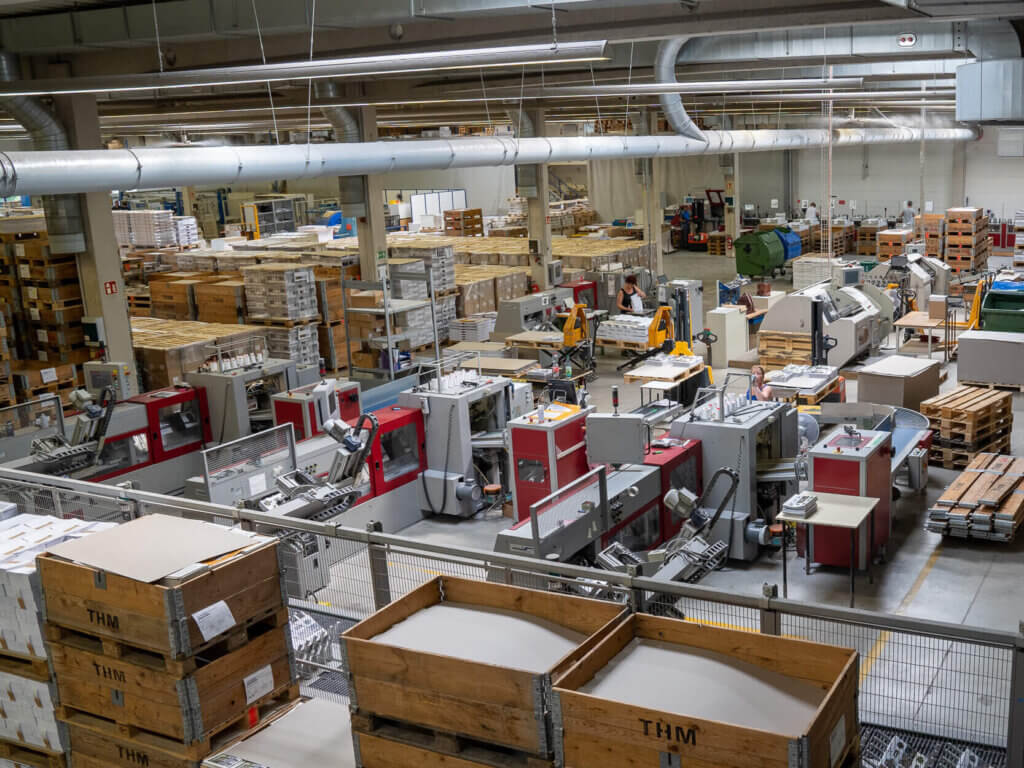
At Beltz Grafische Betriebe in Bad Langensalza, craftsmanship meets modern technology. Thanks to many years of experience and a wide range of technical capabilities, even the most challenging projects can be carried out with precision and reliability.
What we offer:
👉🏻 A variety of binding techniques:
Depending on your preferences and the intended use, we use adhesive binding (hot melt or PUR) or thread stitching—for maximum stability and flexibility.
👉🏻 Finishing options:
Even paperbacks can be designed to a high standard—for example, with flap-style binding, spot varnish, embossing, or printed endpapers.
👉🏻 Customized consulting:
Together with our clients, we develop the right format and optimal setup, and provide advice on cost-effectiveness and impact.
👉🏻 Reliable production:
Our production process is designed for efficiency and quality—even for medium to large print runs.
If you’d like to see an example of a successful paperback adaptation, take a look at our portfolio —there you’ll find, among other things, the extensive fantasy series *Warrior Cats* as well as numerous travel books in a handy format.
In summary: A wide variety of books in different formats
Paperbacks are truly versatile. They combine a handy format, an appealing look, and cost-effective production—making them an attractive choice for both readers and publishers. Whether it’s fiction, non-fiction, or travel literature, the paperback format has long since established itself as a staple.
At Beltz Grafische Betriebe, we also know what matters most in production—from the initial consultation to the finished book. Would you like to know what options a paperback offers for your project?
Then let us advise you—together, we’ll find the right solution.
Contact us now to learn more about our softcover services.