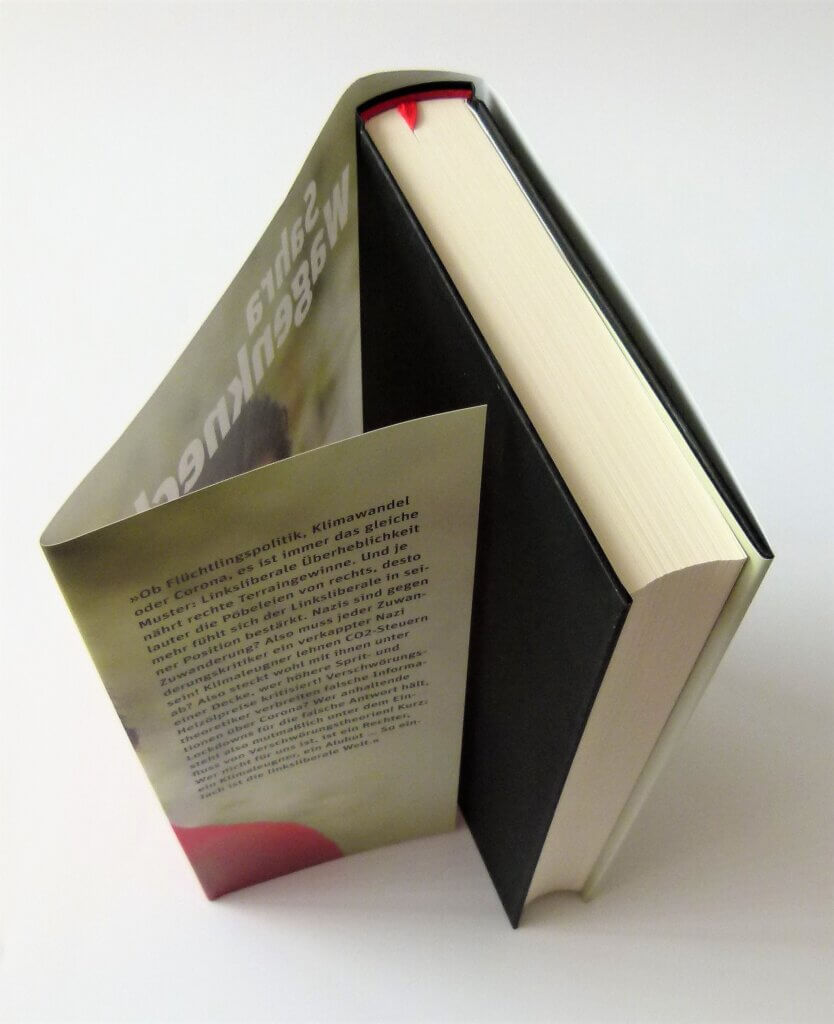
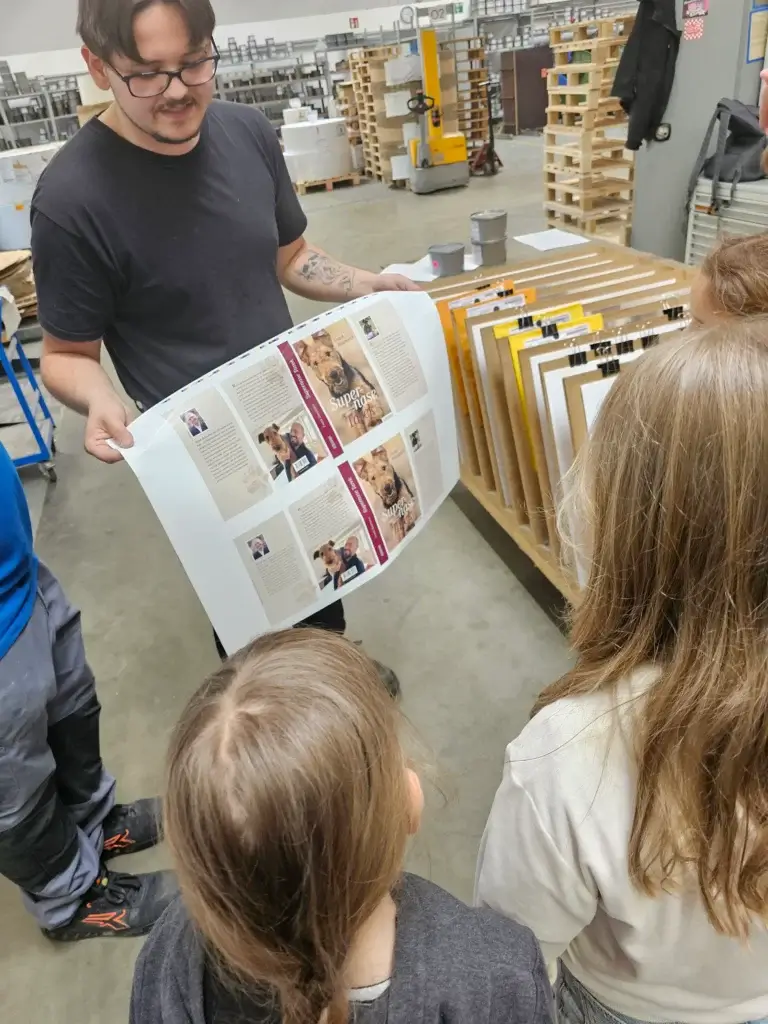
In the field of print media, the final finishing touch often determines whether a printed product makes a strong impression—or gets lost in the sea of options. Whether it’s packaging, business stationery, or a high-end paper product: Targeted finishing techniques can be used to create visual highlights, enhance the tactile experience, and subtly convey brand values. In this article, we’ll introduce you to five proven methods in the field of print finishing—each with its own unique characteristics, typical applications, and advantages and disadvantages. This will not only give you an overview but also enable you to make an informed decision about which finishing option adds real value to your project. We’ll also show you examples of combined techniques and what you should keep in mind beforehand.
Why Print Finishing? Relevance, Benefits, and Limitations
Print finishing is more than just a visual extra—it serves specific functional and communicative purposes. In highly competitive markets, a high-quality finished print product can make all the difference: It enhances perception, strengthens brand identity, and conveys value. Especially for products that come into direct contact with customers—such as packaging, promotional brochures, or invitations—the tactile and visual impression is a powerful tool that can make all the difference.
Typical products for which print finishing is worthwhile
- Packaging for high-quality products (e.g., cosmetics, spirits, electronics)
- Brochures and catalogs designed to convey an image
- Business supplies such as business cards or folders in the B2B sector
- Book covers, especially for limited-edition or deluxe editions
- Mailings and direct marketing products where attention is key
Print finishing is less suitable in the following cases:
- For high volumes and a tight budget, when standard solutions are sufficient
- For products with a short lifespan (e.g., simple handouts)
- When high recyclability is a priority (depending on the technology)
Furthermore, the topic is also relevant from a technical perspective: Modern processes enable a wide variety of combinations that were virtually impossible to achieve in the past. At the same time, there is a growing awareness of sustainable print finishing—for example, through biodegradable coatings or recycling-friendly finishing materials. Those who explore this topic can make informed decisions about when the effort is worthwhile—and how to create added value in a thoughtful way.
In this blog post, discover exciting information about 5 effective print finishing techniques, including examples, pros and cons, and areas of application.

UV Varnish / Spot Varnish
The use of UV varnishes is one of the most versatile methods of print finishing. After the actual printing process, a layer of varnish is applied to the surface and immediately cured by UV light. A key consideration is whether the varnish is applied over the entire surface or selectively as a spot varnish to highlight individual graphic elements or text areas. Through precise control, matte and glossy effects can be created within a single area.
This process is particularly well-suited for emphasizing contrasts—such as in logos or image details—without making the entire surface appear excessively glossy. In practice, UV varnish is used on book covers, high-quality brochures, and exclusive business stationery.
However, there are limitations: When applied over large areas, the effect can become overpowering and appear uneven. In addition, under heavy use—such as frequent handling or bending—there is a risk that the varnish layers will peel off. Recyclability should also be taken into account, as with certain material combinations, the varnish can complicate processing in the recycling system. For medium-sized runs and high-end products, UV varnish is often a cost-effective solution—especially if you want to add subtle highlights without resorting to an overly glossy finish.
Hot foil stamping
Hot foil stamping is a classic print finishing process that impresses with its elegance and precision. In this process, a metallized or colored foil is transferred to the substrate using heat and pressure. The advantage is that the foil itself is solely responsible for the final result, while the substrate remains largely untouched. This creates a clear, brilliant effect, for example in gold, silver, metallic colors, or decorative variations such as holograms.
This process is particularly well-suited for logos, lettering, and graphic details where a sophisticated accent is desired. The effect is striking and immediately noticeable. However, certain limitations must be taken into account when using this process: minimum line widths, spacing requirements, and precise stamping areas must be adhered to. On highly textured papers or in areas with small text, the process may reach its limits. In addition, there are tooling costs—such as for the stamp—that are only recouped with larger print runs.
Hot foil stamping is often an excellent choice for high-quality invitations, exclusive packaging, or elegant printed materials—provided that the design, material, and layout are carefully coordinated.
Embossing / Blind Embossing
Embossing, particularly in its blind embossing form, is a subtle yet effective form of print finishing. In this process, the material is mechanically shaped—either raised (raised embossing) or recessed (depressed embossing)—thereby creating a relief effect without the use of any ink. This structural change creates a tactile effect that leaves a direct, perceptible impression on the touch.
Blind embossing is particularly well-suited when you want to add a sophisticated touch without using color or extra gloss. It can also be combined very well with other finishing techniques, such as foil stamping or spot varnish, and thus integrated seamlessly into the overall design.
Nevertheless, embossing presents technical challenges: It requires more complex dies, and precise calculations and exact material properties are necessary to ensure that the relief is embossed cleanly without overtaxing the paper. In addition, deep embossing sometimes leaves marks on the back of the material. In projects with ambitious designs—such as high-quality stationery, elegant invitations, or specialty print products—embossing can unlock great design potential as a subtle technique that adds texture.
Die Cutting & Laser Cutting
Die-cutting is a classic print finishing technique in which parts of a printed product are cut out or contoured. As the technology has evolved, laser die-cutting in particular has become established, lending this technique additional precision and flexibility. Unlike mechanical die-cutting, the laser operates without physical contact and can cut even fine shapes and delicate details without putting stress on the material.
This technique is ideal for creative elements, windows in folding boxes, pop-up structures, or custom-shaped products. Laser die-cutting offers tremendous creative freedom, especially in applications where the design and shape need to align perfectly with the brand identity.
However, die-cutting produces a large amount of material waste, as the cut-out elements are discarded. In addition, material that is too thick can compromise accuracy or cause the cut edge to appear rough. The cost of the cutting dies depends on their complexity and quantity. Overall, die-cutting or laser die-cutting is particularly worthwhile for high-quality products with specific requirements for design and appearance, such as packaging with display windows, creative cards, or specially shaped marketing materials.
Film Lamination / Cellophane Lamination (Matte, Gloss, Soft-Touch)
Film lamination, also known as cellophane lamination, is a well-established print finishing process that enhances both the protection and the sensory appeal of a printed product. In this process, a thin film is applied to the printed material using heat and adhesive. This film has a matte, glossy, or soft-touch finish and gives the final product a uniform, protected surface that is more resistant to moisture, scratches, and dirt.
The soft-touch finish, in particular, creates a noticeably soft, almost velvety feel, which is often used on high-quality cards, brochures, or covers. In this way, the finish meets both functional and visual requirements.
However, there are limitations here as well: The additional material and processing costs must be taken into account. In some cases, a film can make recycling more difficult, especially if it is firmly bonded to the substrate. The film’s edge and the adhesive bond must also be cleanly executed to prevent peeling or bubbling. Film lamination is therefore particularly well-suited for medium to large formats in high-end applications—where appearance, protection, and tactile feel are equally more important than cost.
An Overview of the Respective Advantages and Disadvantages
The following overview provides a concise comparison of the key advantages and disadvantages of the various print finishing techniques.
| Technology | Advantages | Disadvantages |
|---|---|---|
| UV Varnish / Spot Varnish | – Targeted highlighting through selective application – Glossy or matte finish available – Cost-effective for small areas | – Becomes dominant quickly when used over large areas – May peel off under stress – Recycling may be difficult |
| Hot foil stamping | – Elegant metallic effect (gold, silver, etc.) – No show-through on the back – Strong visual impact | – Minimum line widths must be observed – Tooling costs for custom embossing – Limited to smooth papers |
| Embossing / Blind Embossing | – Visible depth – Subtle, high-quality effect – Can be combined with other techniques | – Back-side printing possible – Higher production costs – Note material limitations |
| Die-cutting / Laser die-cutting | – Great design flexibility – Particularly well-suited for creative shapes – Laser technology enables very fine cuts | – More waste from punched-out parts – Limitations on material thickness – Depends on complexity |
| Film Lamination | – Protection against scratches and moisture – Smooth surface – Soft-touch finish offers a unique feel | – Additional costs due to film material – May be more difficult to recycle – Careful processing required |
What You Should Keep in Mind in Advance
1. Choice of Material & Surface Texture
Not every technique works on every type of paper. Textured papers or very rough materials, for example, may have limitations when it comes to film lamination or embossing.
2. Data Structure & Alignment
Margins, safety margins, and minimum line widths vary depending on the technique used. Careful data preparation is crucial, especially when using hot foil, fine lines, or die-cuts.
3. Tooling Costs and Print Run
One-time die or tooling costs are only recouped once a certain quantity is reached—for small runs, digital or flexible processes are often a better option.
4. Environmental and Recycling Considerations
Some finishes make recycling more difficult (e.g., thick layers of varnish, laminated films). Sustainable alternatives or minimal use are possible.

When will you begin applying print finishes to your products?
Each of these five techniques offers unique benefits for your print project. The key is to choose the right technique for your objectives, choice of materials, and budget, while also considering the possibility of combining multiple methods. This results in a printed product that not only looks great but also feels good and performs well.
Would you like to enhance your printing project with high-quality finishing touches? Please contact us for a personalized consultation and a detailed quote.